Where it All Began…

My name is Arabella Finch.
Yes, like the bird.
Small.
Observant.
Intensely curious.
Known for its vibrant red plumage.
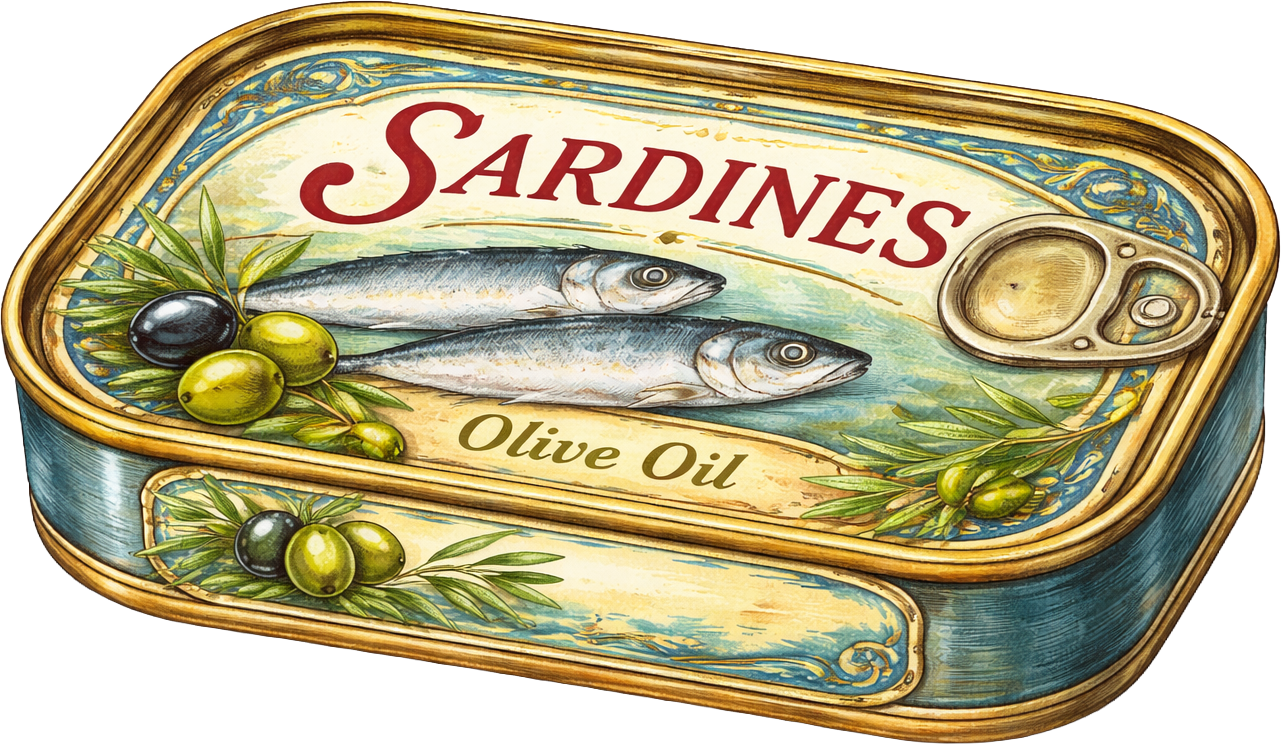
I am the proprietor of The Cedar Chest, a nondescript little tinned fish and provisions shop.
The Cedar Chest does not advertise what it contains.
It never has.
Visitors strolling past its modest storefront, tucked away in California’s misty, secluded coastal wine country, might assume it is an antique shop.
Or perhaps a forgotten bookseller.
Only the intensely curious ever venture inside.
When my great-uncle Percival Finch founded the shop decades ago, he chose its name carefully.
The actual cedar chest—an old steamer trunk covered in worn brown leather—sits in the back room.
He brought it with him from England when he “relocated,” as he would say, though never with further explanation.
As a child, I spent long summer afternoons perched on a stool behind the counter while Uncle Percival polished sardine tins as if they were silver heirlooms.
He spoke in metaphors.
He recommended mackerel the way sommeliers recommend Burgundy.
He insisted that oil carries memory.
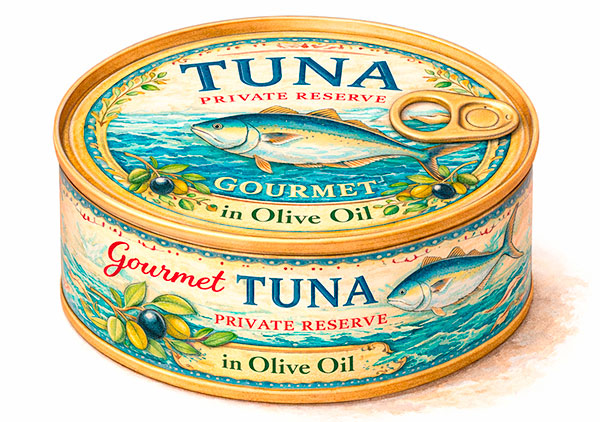
At teatime, my uncle would allow me to choose any tin in the shop for our afternoon snack.
I always chose tuna.
Safe.
Familiar.
Predictable.
He never objected.
He would simply smile in that quiet, knowing way of his and say, “As you wish, my dear… but let me tell you where your tin came from and what makes it so special.”
And then he would speak—not like a shopkeeper, but like a cartographer of oceans, a historian of tides, a guardian of stories hidden in brine and olive oil.
I was mesmerized by the vivid word-pictures he painted for me.
At the time, I believed he was embellishing details for my benefit.
Now, I am not so sure.
When Uncle Percival passed, he left everything to me.
The shop.
The cedar chest.
And the contents of both.
Returning to The Cedar Chest shop all those years later, I found the same familiar rows of tinned fish, carefully stacked and beautifully organized.
But inside the leather covered cedar chest in the back room, I found tins I had never seen for sale in the shop.
This was curious to me.
I couldn’t understand why Uncle Percival had kept them long after the dates indicated they had expired.
And there were binders with carefully cataloged labels from hundreds of different fish tins.
Each had been painstakingly removed to minimize damage and stored in plastic sleeves like treasured works of art.
And journals.
Dozens of them in all shapes and sizes.

At first glance, the pages appeared chaotic and disorganized with notes stuffed in every crevice.
But clearly, each scrap had been placed between the pages with intention.
There were letters from mysterious people who seemed to speak to my uncle in code as they breathlessly described their own new discoveries, proclaiming, “…the flavor and texture is exquisite! You simply MUST try it, Percival.”
Old advertisements.
Yellowed newspaper and magazine clippings.
Cocktail napkins from places I did not recognize, softened by time and faintly stained with oil.
And notes.
So many notes.
Some were just one or two words, hastily scribbled in the margins.
Others spanned entire pages, written in excited detail about a new tin he had discovered.
He recorded dates, countries, production codes, oceans, fish types, batch numbers, distant harbors.
He sketched rudimentary drawings of tins, olives, lemon wedges, ornate decanters of oil, and small red chili peppers.
He even drew what could only be described as “treasure maps”—small illustrations charting coastlines and marked with Xs, stars, and circles in precise locations.
I spent months poring over these “junk” journals, yet little of their contents any made sense to me.
It was a puzzle, and I could not see the larger image it formed.
Yes, everything was about tinned fish in one way or another.
But I was missing something.
Why had Uncle Percival locked these notes away as if they were gold?
What made these cryptic jottings so valuable to him?
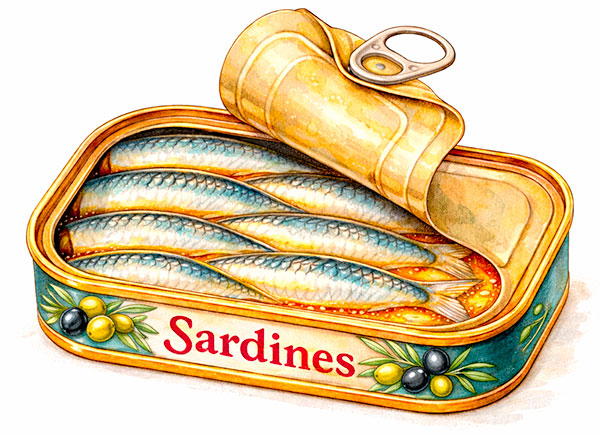
One afternoon, while contemplating these mysteries, I found myself holding a tin of his favorite sardines.
Without thinking, I slipped my finger into the pull-tab and gently lifted the lid.
I startled myself when I looked down and saw what I had done.
But I was instantly captivated.
The fish inside were laid in neat, braided rows.
The sleek silver skin shimmered as golden olive oil washed over them.
They were unexpectedly beautiful.
I do not know why I resisted sardines as a child.
But I was eager to try them now.
That first bite is seared into my memory.
Tender.
Silken.
Impossibly rich.
It was not merely delicious.
It was revelatory.
And in that moment, I understood everything.
Uncle Percival had been part of something far larger than I had imagined.
It was an elite circle of tinned fish purveyors and preservers.
Seekers of exceptional tins not easily discovered by the casual consumer.
Guardians of tradition.
Curators of excellence.
I had inherited more than inventory.
I had inherited responsibility.
Now, I taste tins with reverence.
I slide each cardboard sleeve free without tearing it.
I archive every label in acid-free binders.
I study cannery seals, miniature maps printed on side panels, production lot markings.
Government stamps.
Importer addresses.
Brand histories.
The packaging is not disposable.
It is testimony.
Some might call this obsession.
Or even addiction.
I call it research.
This website is the organized result of that research.
A visual archive of brands, suppliers, subscriptions, events, tours, recipes, and histories uncovered through Uncle Percival’s notes.
Each link is a breadcrumb.
Each tin, a clue that leads me to my own exceptional discoveries.
The sea has seasons.
Oil has character.
Time alters everything.
Uncle Percival knew this.
I now see that he knew far more than he ever said aloud.
For now, I tend the shop.
I follow the journals.
I open the tins.
And I research.
It is delicious research.
Please join me, if you are so inclined.
But be forewarned.
Following these clues may lead to your own endless obsession with indulging in “…just one more tin.”
~ Arabella Finch

